In the age of fast fashion, where clothes come cheap and go out of style even faster, an unexpected revolution is quietly unfolding across India.
Young Indians—millennials and Gen Z alike—are rediscovering the handloom saree, a six-yard drape once seen as “old-fashioned” or “reserved for special occasions.”
Today, it’s being celebrated as a symbol of heritage, sustainability, and personal identity. From Instagram reels to office wear, the handloom saree is no longer just your grandmother’s attire—it’s a statement.
A Legacy Wrapped in Six Yards
India has always been a land of weaves. From Banarasi silks to Kanjeevaram, Jamdani to Ikat, the handloom saree has been an heirloom in most Indian families.
Yet, for decades, younger generations preferred jeans, dresses, or Western formal wear for daily life. Sarees were tucked away in trunks, only pulled out for weddings or festivals.
But today, things are changing. Young professionals, students, and influencers are turning to handloom sarees not only for occasions but as everyday fashion.
The once “traditional” drape is now paired with crop tops, sneakers, or even denim jackets, creating a fusion style that blends heritage with modernity.
Social Media: The Loom Goes Digital
If handlooms were fading into obscurity, social media became the loom that rewove them into public consciousness. Instagram pages dedicated to saree styling, fashion bloggers experimenting with drapes, and reels showing “10 ways to wear a saree” have made this attire feel fresh and versatile.
The hashtag #SareeNotSari and #SixYardsOfGrace trend regularly, showcasing sarees as stylish, cool, and unapologetically Indian. What was once considered difficult to drape or impractical is now seen as a canvas for creativity.
For many young women (and even men who are draping sarees), wearing handloom is not about nostalgia—it’s about self-expression.
The Sustainability Factor
Fast fashion is notorious for its environmental cost. Synthetic fabrics, chemical dyes, and mass production contribute to pollution and exploit labor. In contrast, handloom sarees are eco-friendly, sustainable, and ethical.
- Most handlooms use natural fibers like cotton or silk.
- Vegetable dyes like indigo are gentle on skin and eco-conscious.
- The weaving process employs local artisans rather than machines, supporting rural economies.
For environmentally aware Gen Z consumers, choosing a handloom saree is not just about style but about making a conscious statement: fashion that doesn’t cost the earth.
The Economics of Revival
The revival of handloom sarees is also a story of empowerment. In states like West Bengal, Andhra Pradesh, and Tamil Nadu, young designers and cooperatives are reimagining sarees for a younger audience. Brands like Raw Mango, FabIndia, and local startups on Instagram are giving artisans direct access to customers, cutting out exploitative middlemen.
The result?
- Weavers are earning better wages.
- Rural economies are being sustained.
- Consumers are getting unique, handcrafted pieces instead of mass-produced duplicates.
This direct-to-consumer trend is helping the saree industry thrive in a market otherwise dominated by synthetic fast fashion.
Saree as Empowerment
For many young women, wearing a saree today is also about empowerment. The act of draping a saree is intimate, powerful, and symbolic. It connects them with their roots while allowing them to redefine tradition on their own terms.
College students are wearing sarees on regular days, not just cultural events. Young professionals are choosing handlooms for office wear, signaling confidence and individuality. Even men are experimenting with drapes, breaking gender stereotypes.
The saree has become not just clothing, but a movement of identity.
Saree Goes Global
The handloom revolution isn’t limited to India. From red carpets in Hollywood to global fashion runways, sarees have made their presence felt. Celebrities like Vidya Balan, Priyanka Chopra, and even international icons like Oprah Winfrey have celebrated the saree as timeless elegance.
Boutiques in New York, London, and Tokyo now stock handloom sarees, marketed as slow fashion with a story. In a world hungry for authenticity, the saree is being embraced as a wearable heritage piece.
Indigo & Mustard: Colors That Speak
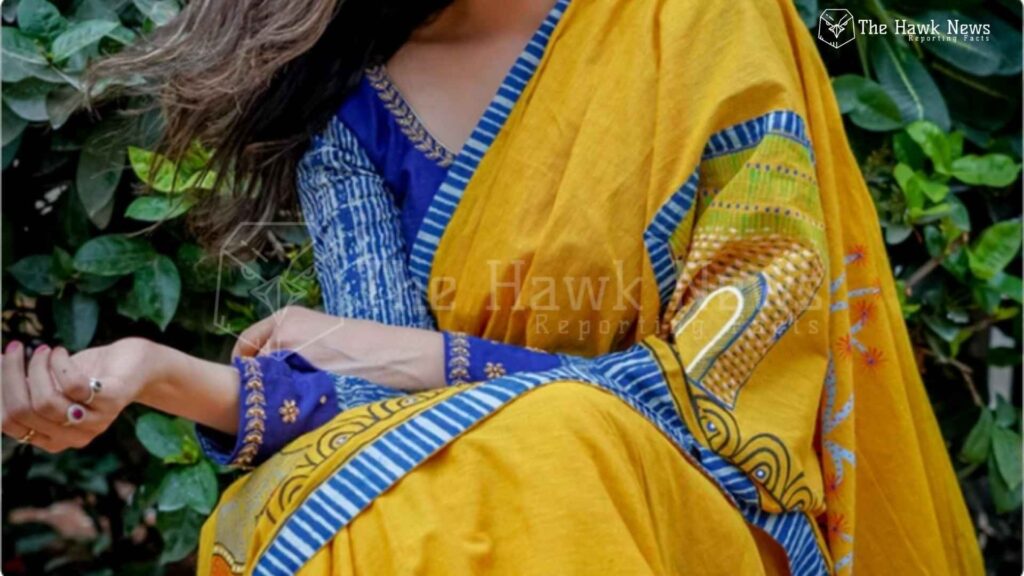
The image of indigo-blue and mustard-yellow weaves reflects more than aesthetics—it’s a reminder of India’s textile story. Indigo, once called “blue gold,” was at the center of colonial exploitation.
Today, it’s reclaimed as a symbol of pride and resilience. Mustard yellow, vibrant and earthy, complements indigo, embodying warmth and tradition.
Together, these colors represent the past and present woven together—a perfect metaphor for the handloom revival itself.
The Future of the Saree
Will the handloom saree continue its revival, or is this just a passing trend? Experts believe the momentum is here to stay. With sustainability becoming mainstream, and fashion shifting towards personal expression rather than conformity, handloom sarees tick all the right boxes.
The saree is no longer about being traditional—it’s about being timeless, versatile, and authentic.
Conclusion
The revival of the handloom saree is more than a fashion comeback. It’s about a generation reclaiming its roots, choosing sustainability over waste, and finding pride in its heritage. In every drape, there’s a story—of a weaver, of a culture, of resistance, and of beauty.
For young Indians today, wearing a saree isn’t about looking like their mothers or grandmothers. It’s about redefining tradition for the future. And in that act, the handloom saree has found new life—woven with threads of heritage, stitched with confidence, and draped in pride.