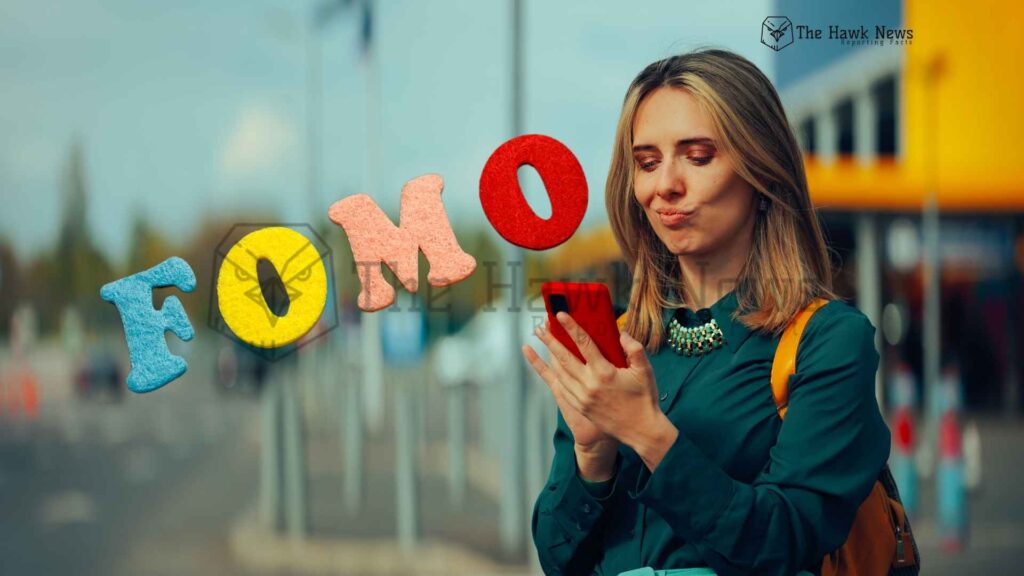
Scrolling through Instagram late at night, you see friends at a party you didn’t attend, a colleague celebrating a promotion, or strangers vacationing in exotic places. Suddenly, you feel a pang of anxiety:
Am I missing out? Am I falling behind? That uneasy feeling has a name—FOMO, or Fear of Missing Out—and it’s quietly becoming one of the biggest stressors of our time.
Once considered just a buzzword, FOMO today has profound implications on emotional well-being, physical health, and lifestyle choices.
For Gen Z, Millennials, and even older adults adapting to a hyperconnected world, the pressure of being “always in the loop” is reshaping how we live, sleep, work, and even how our bodies respond to stress.
What Exactly Is FOMO?
Coined in the early 2000s, FOMO describes the fear or anxiety that others are experiencing rewarding experiences without you. While the feeling has always existed—think about missing a social event or hearing about a friend’s adventure—social media has amplified it.
Now, it’s not just about what you think others might be doing—it’s about seeing it, often in real-time, on your screen. Platforms like Instagram, TikTok, and Snapchat thrive on curated highlights of people’s lives, tricking the brain into constant comparison.
A 2019 study published in Psychiatry Research confirmed that high social media use correlates strongly with higher levels of FOMO, which in turn is linked to anxiety, depression, and poor sleep quality.
Emotional Health: Anxiety in the Digital Age
The most obvious consequence of FOMO is its toll on mental health. Constant comparison creates a cycle of dissatisfaction and self-doubt.
- Anxiety & Stress: People with high FOMO often report restlessness, racing thoughts, and heightened stress when offline.
- Depression: Feeling excluded or left behind repeatedly can chip away at self-esteem, triggering depressive symptoms.
- Burnout: At work, FOMO manifests as taking on extra projects or refusing breaks out of fear of “falling behind,” leading to exhaustion.
Dr. Larry Rosen, a psychologist who researches technology’s impact, notes: “FOMO keeps the brain in a state of social hypervigilance, constantly scanning for what others are doing, which drains emotional energy.”
The Physical Toll: When Stress Shows on the Body
FOMO doesn’t just stay in the mind—it seeps into the body. Stress hormones like cortisol surge when people experience anxiety about missing out, and over time, this can lead to serious health issues.
- Sleep Deprivation: Late-night scrolling to “catch up” disrupts circadian rhythms, reducing deep sleep.
- Cardiovascular Strain: Chronic stress from social comparison is associated with higher blood pressure and heart risk.
- Immune Weakening: Prolonged cortisol elevation weakens immunity, making individuals more vulnerable to illness.
- Unhealthy Habits: FOMO often drives overconsumption of caffeine, junk food, or alcohol to cope with stress or to keep up with late-night socializing.
A 2022 survey by the American Psychological Association highlighted that nearly 40% of young adults admitted FOMO-driven behaviors disrupted their sleep and daily health routines.
How Social Media Fuels the Cycle
Why does FOMO feel so unavoidable? The answer lies in the design of social platforms.
- Highlight Reels: Most people only post their best moments, creating the illusion that everyone else’s life is perfect.
- Infinite Scroll & Notifications: Apps are designed to keep users hooked, refreshing feeds for the next “update.”
- Metrics of Self-Worth: Likes, views, and comments become external validators, tying personal value to online approval.
Gen Z and Gen Alpha, who grew up entirely in this environment, are particularly vulnerable. For them, missing out doesn’t just mean missing an event—it feels like losing status in their digital community.
FOMO and Lifestyle: Always On, Never Rested
The fear of missing out doesn’t just impact emotional and physical health—it reshapes lifestyles.
- Overcommitting: Young professionals often say “yes” to every opportunity, fearing a missed chance to network or grow.
- Social Exhaustion: Attending events out of obligation rather than joy can lead to burnout.
- Digital Dependency: Constant refreshing of feeds becomes a compulsion, reinforcing the anxiety loop.
Interestingly, FOMO also impacts spending habits. The rise of “experience economy” trends—where people prefer spending on travel, concerts, or festivals rather than savings—is partly fueled by the fear of missing unique opportunities.
Can FOMO Be Turned Into JOMO?
Not all is bleak. Health experts suggest reframing FOMO into JOMO—the Joy of Missing Out. It’s about finding peace in being present and prioritizing quality over quantity.
Practical Ways to Cope with FOMO:
- Digital Detox Hours: Designate screen-free times, especially before bed, to allow the brain to reset.
- Mindful Social Media Use: Follow accounts that uplift rather than trigger comparison.
- Redefine Success: Focus on personal growth milestones instead of external validation.
- Strengthen Offline Bonds: Deep, real-life relationships counterbalance digital anxieties.
- Self-Care Routines: Regular exercise, meditation, and journaling help regulate stress.
Even small shifts, like leaving the phone outside the bedroom or engaging in “unplugged weekends,” can reduce anxiety and improve sleep quality.
Why FOMO Matters for Public Health
It’s tempting to dismiss FOMO as a trendy buzzword, but its ripple effects are significant. From rising cases of teen anxiety to workplace burnout and stress-related health problems, FOMO is shaping a generation’s well-being.
Health experts warn that unchecked, FOMO may become as serious a public health concern as obesity or substance abuse. Governments and schools are beginning to respond—introducing digital literacy programs and mental health workshops to address the issue head-on.
Conclusion: Finding Balance in a Hyperconnected World
The fear of missing out is, in many ways, the cost of living in a hyperconnected era. While mobiles and social media connect us more than ever before, they also amplify insecurities and strain both mind and body.
But awareness is the first step. By reframing FOMO into mindful living, embracing JOMO, and prioritizing health over hype, individuals can reclaim control.
Because ultimately, the real fear shouldn’t be missing out on a party or a post—but missing out on health, peace of mind, and the joy of being present.