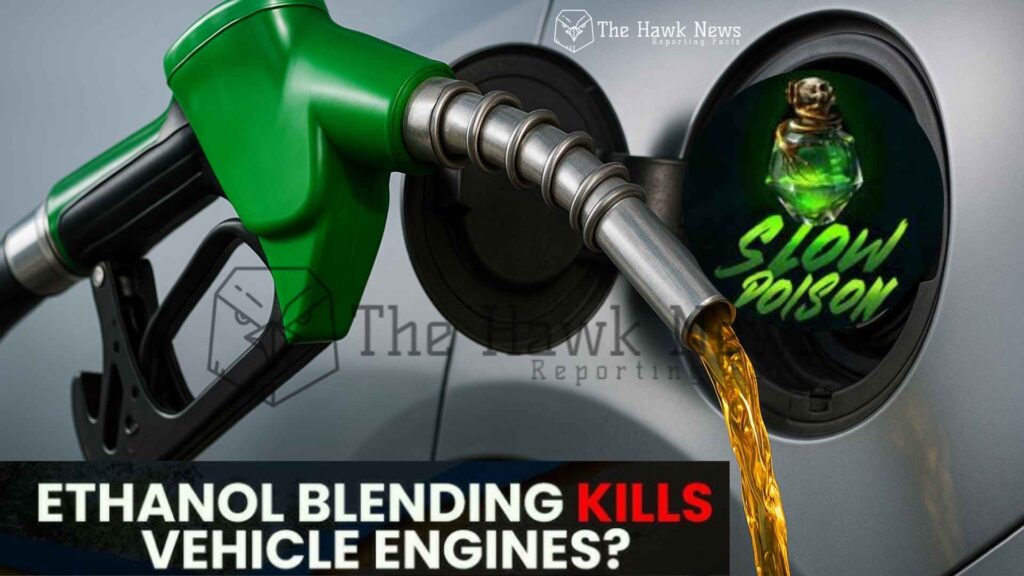
India is betting big on ethanol-blended petrol. By mixing ethanol (an alcohol made from crops like sugarcane and maize) with conventional petrol, the government aims to reduce dependence on costly crude oil imports, cut carbon emissions, and support farmers.
On paper, it’s a win-win policy: greener fuel, energy security, and rural income.
But beneath the surface, a nagging question persists—while ethanol may be good for the environment and the economy, is it quietly harming our vehicles in the long run? Is ethanol-blended petrol a slow poison for engines?
Let’s break it down.
What is Ethanol-Blended Petrol?
Ethanol is an oxygenated fuel derived mainly from biomass like sugarcane, corn, or crop residues. When mixed with petrol, it burns cleaner, reducing harmful emissions such as carbon monoxide and hydrocarbons.
In India, fuel pumps now offer E10 petrol (10% ethanol, 90% petrol), with the government pushing towards E20 by 2025. Some countries, like Brazil, already use much higher blends (up to E85) without major issues.
But India’s vehicle ecosystem—cars, bikes, and even commercial fleets—faces unique challenges with this transition.
Why Ethanol Sounds Great on Paper
- Cleaner Fuel: Ethanol contains oxygen, which helps petrol burn more completely, reducing tailpipe emissions.
- Supports Farmers: Ethanol production creates a market for sugarcane, maize, and surplus crops.
- Reduces Import Bills: India imports over 80% of its crude oil; ethanol blending cuts the foreign exchange burden.
- Lower Carbon Footprint: Ethanol is renewable, unlike fossil fuels.
From an environmental and policy perspective, it’s a bold step forward. But for vehicles, the story is more complicated.
The Dark Side: How Ethanol Affects Engines
While ethanol blending isn’t an outright “toxin,” it does carry side effects that may feel like a slow poison over time, especially for older vehicles.
1. Corrosion of Engine Parts
Ethanol attracts water from the atmosphere (it’s hygroscopic). This water mixes with fuel, leading to:
- Rust in fuel tanks and pipelines.
- Corrosion of carburetors and injectors.
- Premature wear of rubber seals and gaskets.
2. Reduced Fuel Efficiency
Ethanol has a lower energy density than petrol. In simple terms:
- 1 liter of petrol = more energy
- 1 liter of ethanol = less energy
Blended fuel means your mileage could drop by 2–6%, especially at higher blends like E20.
3. Cold Start Issues
Ethanol doesn’t vaporize as easily as petrol in low temperatures. Vehicles may struggle with cold starts, particularly in regions with cooler climates.
4. Damage to Older Vehicles
Cars and two-wheelers manufactured before 2010 were not designed for ethanol blends. Rubber hoses, plastic parts, and older carburetor systems are particularly vulnerable. Prolonged use can shorten engine life.
5. Phase Separation
When water contamination is high, ethanol and petrol can separate inside the tank, forming layers. This can cause misfiring, stalling, or even complete engine failure.
Auto Industry Response
Carmakers in India are racing to adapt. Newer vehicles (post-2020) are increasingly being designed to handle E10 and E20 fuels, with modified fuel lines and corrosion-resistant materials.
- Two-wheelers: Companies like Hero MotoCorp and Bajaj have begun rolling out ethanol-ready models.
- Four-wheelers: Maruti Suzuki and Hyundai are adjusting engines for higher ethanol blends.
- Flex-fuel Engines: These can run on blends up to E85, but they are still rare in India.
Still, millions of older vehicles remain on the road. For them, ethanol blends may indeed behave like a slow poison—eroding performance gradually until a costly repair is needed.
What Mechanics Are Saying
Ask a neighborhood mechanic, and many will share real-world complaints linked to ethanol petrol:
- “Fuel pumps are failing faster.”
- “Customers are coming in with clogged injectors.”
- “Mileage complaints are increasing after the switch to E10.”
While not every problem can be blamed on ethanol, the trend is noticeable, especially in older bikes and cars.
Global Experiences
Other countries provide some clues:
- Brazil: Successfully uses high ethanol blends, but only because vehicles are designed for it from the start.
- United States: E10 and E15 are common, but drivers with older cars often report corrosion and performance issues.
- Europe: Cautious adoption, with E5 and E10 being the norm; higher blends are avoided for mass vehicles.
The lesson is clear—ethanol works if the vehicle ecosystem is ready for it. If not, it slowly eats away at parts not designed to handle it.
The Consumer Dilemma
For everyday drivers, the situation is confusing. On one hand, ethanol-blended petrol is promoted as the future. On the other, complaints about reduced mileage and repairs keep surfacing.
So, what can consumers do?
- Check Your Vehicle’s Compatibility
Refer to the manufacturer’s guidelines. If your car or bike is older than 2010, be extra cautious with higher blends. - Regular Maintenance
Get fuel systems checked more frequently—clean injectors, replace rubber hoses, and watch for rust in tanks. - Use Additives (If Recommended)
Some fuel additives reduce corrosion and improve performance with ethanol blends. - Don’t Store Fuel for Long
Ethanol petrol absorbs water over time. If you don’t drive often, avoid letting fuel sit in the tank for weeks.
Is Ethanol-Blended Petrol Truly a Slow Poison?
The answer depends on perspective:
- For New Vehicles: No, if they are designed for ethanol blends, they should run without major issues. Manufacturers are already aligning with the government’s E20 roadmap.
- For Older Vehicles: Yes, over time, ethanol may corrode parts, reduce efficiency, and lead to costly breakdowns—acting like a “slow poison.”
- For the Planet: Definitely not. Ethanol blending reduces pollution, cuts oil imports, and supports renewable energy goals.
The Road Ahead
India’s ethanol story is both promising and challenging. To avoid turning it into a “slow poison” for millions of vehicles, the following steps are critical:
- Accelerated rollout of ethanol-compatible engines.
- Clear public communication on which vehicles can safely use higher blends.
- Better fuel storage and distribution systems to minimize water contamination.
- Government incentives for flex-fuel vehicles, which are future-proof.
Final Thoughts
Ethanol-blended petrol is not inherently bad—it’s a transitional fuel aimed at balancing energy security and environmental responsibility. But like any medicine, dosage and compatibility matter.
For vehicles designed for it, ethanol is harmless, even beneficial. But for older machines still dominating Indian roads, it risks becoming a silent enemy—chipping away at performance, mileage, and engine health over time.
So, is ethanol-blended petrol a slow poison? For now, it’s both a cure and a curse—a solution for the planet, but a challenge for the engines of yesterday.
The key lies in how quickly India adapts its vehicle ecosystem to match its fuel ambitions.