The Shadow of Authority
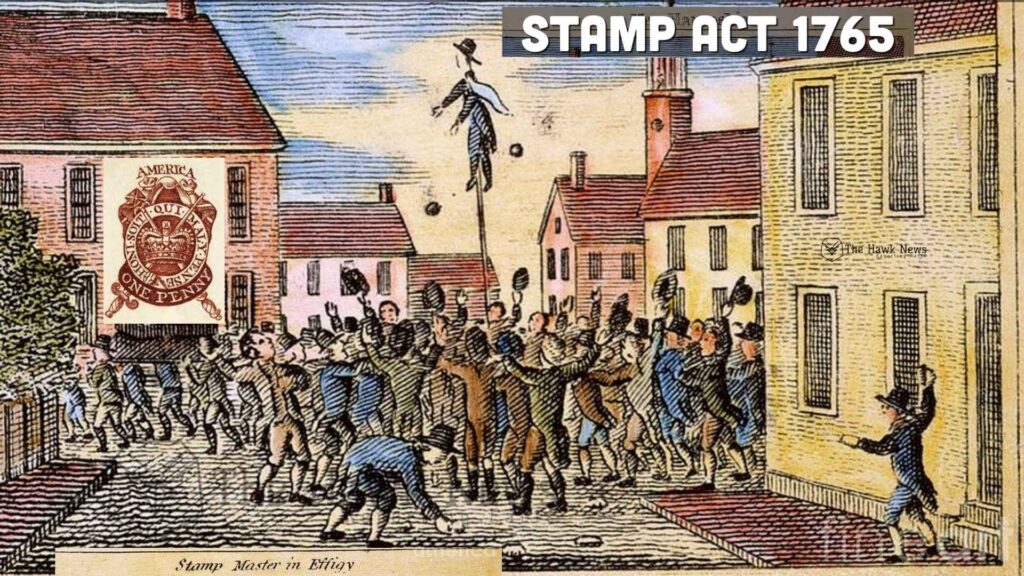
In 1765, a seemingly simple act of law rippled across the American colonies and changed history. The Stamp Act, passed by the British Parliament, required colonists to pay a tax on every piece of printed paper—from newspapers to legal documents and even playing cards.
It appeared a small matter of finance, yet beneath it pulsed something far deeper: control.
That royal stamp was not merely a mark of payment; it was the emblem of power. Each impression reminded the colonists that the Empire’s reach was vast and its grip firm, even across the ocean.
John Adams once wrote, “Liberty cannot be preserved without a general knowledge among the people.”
The Stamp Act did just that—it awakened knowledge, unearthed restlessness, and stirred a moral question that would soon ignite a revolution.
The Principle Over the Pence
The colonists’ anger was not born out of greed but out of principle.
They were not protesting taxation alone; they were protesting taxation without representation. They had no voice in Parliament, yet they were bound by its decrees.
Benjamin Franklin captured it clearly: “They cannot be represented where they have no voice.”
Taverns became forums. Pulpits turned into platforms. Newspapers thundered with dissent.
From New England to the Carolinas, a shared conviction began to form—that liberty was worth the risk, and silence was no longer an option.
Freedom and Its Reflection
Here lies the paradox that history so often hides:
In fighting against the Empire’s control, the colonists began to mirror some of its methods.
They created committees of correspondence, organized boycotts, and enforced public unity—tools that required structure, discipline, and at times, pressure. In resisting the machinery of oppression, they built machinery of their own.
Dr. Martin Luther King Jr. would centuries later echo this eternal truth:
“Freedom is never voluntarily given by the oppressor; it must be demanded by the oppressed.”
Freedom, it seemed, was learning not only to resist but also to organize—to wield power responsibly, without becoming the thing it opposed.
The Human Face of Resistance
Picture a Boston printer with ink-stained fingers, his press quiet beneath the weight of the law. Every page he prints requires that dreaded stamp—a seal that taxes not just his paper but his dignity.
He pauses, staring at the emblem of authority. The ink smells of surrender. And in that silence, something stirs—an understanding that power is not merely about money, but about the right to choose, to think, to speak.
From that realization came words that still burn through time:
Patrick Henry’s cry—“Give me liberty, or give me death!”—was not poetry. It was pain, transformed into purpose.
The Repeal and the Reminder
The Stamp Act was repealed in 1766, yet its shadow remained.
It taught a lesson far greater than Parliament could have imagined: that freedom, once awakened, does not fall back asleep.
Thomas Paine would later write, “Those who expect to reap the blessings of freedom must undergo the fatigue of supporting it.”
The colonists had learned this fatigue—the daily, deliberate defense of liberty.
In their victory, however, lay reflection: how easily power can shift hands and how subtly it can return in new forms.
Echoes Through Generations
The echoes of the Empire still travel through time. Every debate over authority, justice, and representation carries a faint resonance of that moment in 1765.
Abraham Lincoln, confronting his own age of division, once said, “The dogmas of the quiet past are inadequate to the stormy present.” Freedom, if it is to remain alive, must continually question itself. It must remember the oppressor’s shadow even when standing in light.
For the structures that once bound can be rebuilt—sometimes by the very hands that tore them down.
Reflection, Not Repetition
The story of the Stamp Act is not merely a chapter in colonial history—it is a mirror.
It reflects a universal truth: that every pursuit of liberty bears within it the imprint of the power it resists.
The measure of true freedom lies not only in the act of breaking chains but in refusing to forge new ones.
It is a call to vigilance—to hold liberty with humility, aware of how easily strength can harden into control.
History does not speak in silence; it echoes.
And across that echo, the Empire still whispers:
“Remember what you fought against—lest you become it.”