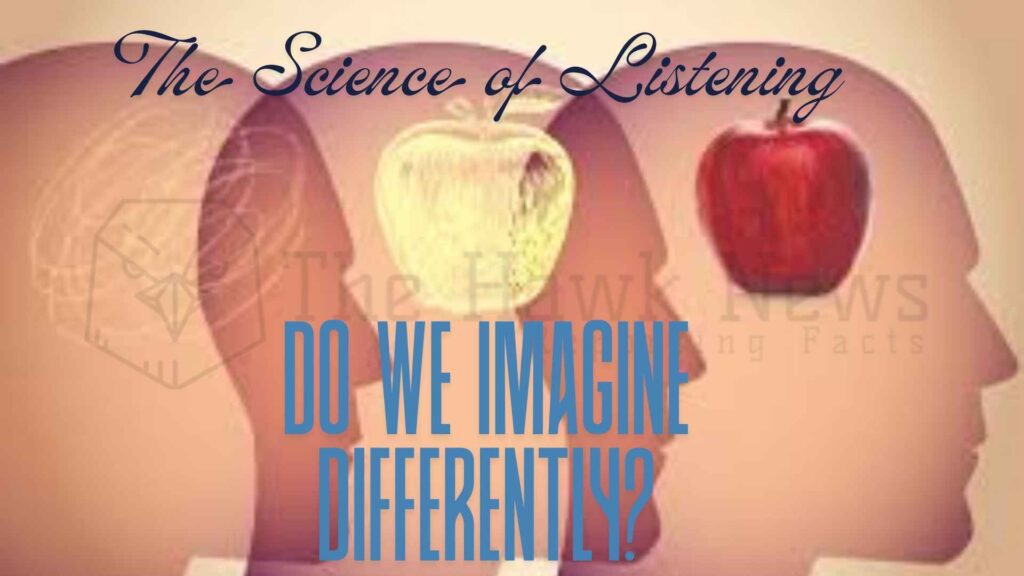
In today’s hyper-digital world, the way we consume content is changing rapidly. From audiobooks and podcasts to binge-worthy shows and animated explainers, humans are surrounded by multiple ways of experiencing the same story.
But here’s the fascinating question: does listening to a story differ from watching it unfold with visuals? And does this change the way we imagine, feel, and remember it?
Let’s unpack this through science, psychology, and culture.
The Power of Pure Listening
Listening, whether through an audiobook, podcast, or a storyteller’s voice, has a unique cognitive effect. Neuroscientists note that when we listen without visual aids, our brain works harder to construct mental images.
Regions like the auditory cortex and the default mode network are activated, sparking imagination and emotional engagement.
This means that when you hear a line like “the castle loomed against the twilight sky,” your brain paints its own mental castle—different from anyone else’s version. Every listener essentially becomes a co-creator of the story.
In fact, studies show that listeners engage more brain regions than viewers, because they’re forced to fill in gaps, imagine character appearances, and construct entire worlds out of words. This makes listening more personal, intimate, and immersive.
When Visuals Take Over
Now, what happens when you add visuals—like a movie adaptation of a book, or a YouTube video with animations? Visual storytelling reduces ambiguity. Instead of imagining a castle, you see the director’s or artist’s version of it.
This anchors imagination—it narrows the possibilities and shapes the audience’s mental model. On the one hand, this makes stories easier to process and remember, because visuals are processed 60,000 times faster by the brain than text or speech. On the other hand, it leaves less room for individual creativity.
Think of Harry Potter: millions of readers had their own image of Hogwarts while reading. But once the films came out, those visual interpretations largely became the default image worldwide.
Different Imagination Pathways
Psychologists believe the two modes create different imaginative experiences:
- Listening only (Auditory Mode):
- Engages imagination deeply.
- Increases memory recall because the listener is actively constructing meaning.
- Promotes creativity since details are filled in by the listener’s mind.
- Listening with Visual Aids (Audio-Visual Mode):
- Engages emotions quickly, thanks to facial expressions, colors, and movement.
- Reduces the cognitive load, making content easier to digest.
- Limits personal imagination, but increases shared cultural understanding (everyone sees the same visuals).
What This Means for Learning
The debate is especially relevant in education. Teachers and app designers often ask: is it better to give students just an audio lecture, or combine it with diagrams, animations, and visuals?
Research suggests that multimodal learning (audio + visuals) improves comprehension and retention—especially for complex concepts like science or math. For example, hearing about the solar system while seeing a moving model locks the knowledge more firmly into memory.
Yet, purely auditory storytelling has its advantages. It develops listening skills, patience, and imagination—abilities that visual-heavy digital media sometimes erode.
Culture, Storytelling, and the Human Experience
This contrast isn’t new. Ancient traditions relied heavily on oral storytelling. From Homer’s Odyssey to Indian epics like the Mahabharata, stories survived generations through listening alone. Listeners imagined the worlds, characters, and battles in their own minds, making the tales adaptable and alive.
In contrast, today’s culture leans toward visual dominance—from movies to reels to TikToks. Content is designed for fast, visual consumption. This shift reflects not just technology, but also changes in how our brains are trained to imagine.
So, Which Is Better?
The truth is—it’s not a competition, but a complement.
- Listening-only strengthens imagination and individuality.
- Visual-aided listening strengthens comprehension and shared cultural understanding.
In a way, the best experiences combine both. Audiobooks may trigger the imagination in ways films can’t, while films bring emotions to life in ways audio struggles to achieve.
For creators—teachers, marketers, filmmakers, or even podcasters—the lesson is clear: match the medium to the goal. If you want creativity, let people imagine. If you want clarity, give them visuals.
The Future: Hybrid Storytelling
Emerging technologies like VR (Virtual Reality) and AR (Augmented Reality) may merge both worlds. Imagine listening to an epic tale while also being able to shape and design the visuals in real-time. Instead of passively consuming, audiences may soon co-create with storytellers.
This could restore the balance—giving people both the richness of imagination and the guidance of visuals.
Conclusion
The next time you listen to a podcast or watch a movie adaptation of your favorite book, remember this: your brain isn’t just absorbing—it’s either painting its own worlds or anchoring them to someone else’s vision. Both are powerful, both are valuable, and together they shape how humans imagine, learn, and connect.