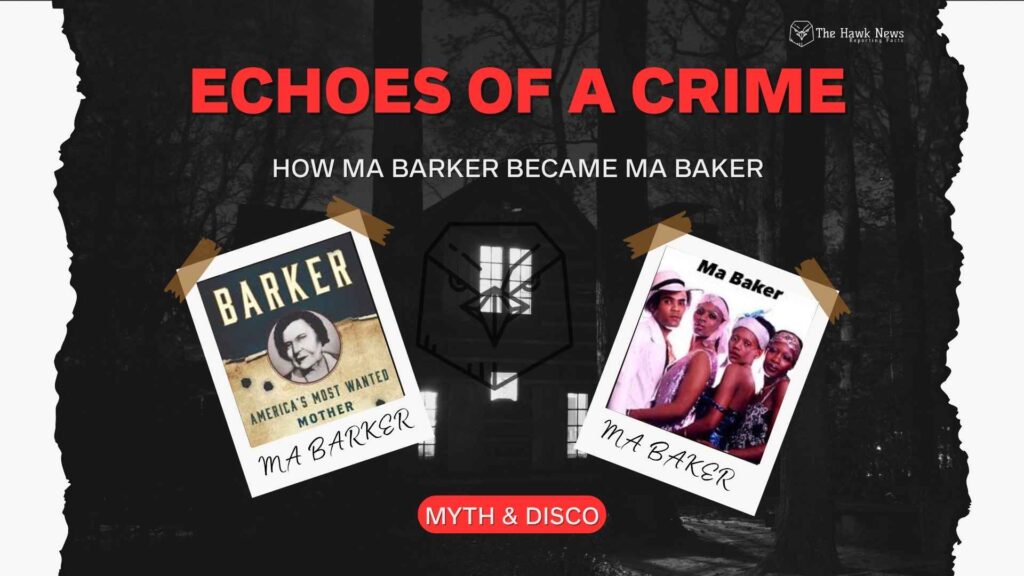
In 1977, disco lights flashed, sequins shimmered, and the dance floors pulsed to a voice that ordered, “Freeze! I’m Ma Baker!”
The song, a Boney M global hit, was a story of a fearless woman who robbed banks, led men, and lived by her own rules.
But few on those dance floors knew that Ma Baker was not just a catchy beat — she was the echo of Ma Barker, a woman from Depression-era America, whose life ended in gunfire and myth.
Between the crime pages and the disco stage, a transformation took place — a brutal tale became a rhythm, and history turned into melody.
The Woman Behind the Myth
Before the music, there was the mother — Kate Barker, born Arizona Donnie Clark in 1873, in Missouri.
She lived an ordinary life by every measure: married, raised four sons, tried to keep her family together through hardship.
But the 1920s and 30s — the Prohibition and Depression years — were breeding grounds for desperation. Her sons turned to crime: armed robbery, kidnapping, and bank heists. And soon, “Ma Barker” became a household name across America, framed as the mastermind behind their criminal empire.
But the truth, historians say, was far less dramatic. The FBI, led by J. Edgar Hoover, painted her as the “most vicious, dangerous, and resourceful criminal brain of the last decade.”
Yet evidence later revealed she may not have been the leader at all — perhaps just a mother swept up in her sons’ chaos. Still, in a nation hungry for villains, the legend of the “Gangster Mom” was too powerful to resist.
When she died in 1935 in a Florida shootout with the FBI — bullets riddling the lakeside house — her story was sealed in both blood and rumor. America loves its outlaws, but it loves its myths more.
From Barker to Baker
Four decades later, in a very different world, another kind of revolution was happening — not in the streets, but on the dance floors.
Frank Farian, the German producer behind the group Boney M, stumbled upon Ma Barker’s story while searching for something dramatic, something that would “sound American” and carry the spark of rebellion. But “Barker” didn’t fit the rhythm. “Baker” did.
And thus, the transformation was complete — from criminal mother to disco queen. Ma Baker became the anthem of the dangerous, the glamorous, and the misunderstood.
The lyrics told of a woman who robbed banks and ruled men with a gun in one hand and courage in the other. It was a dramatized retelling — exaggerated, cinematic, impossible to forget.
Behind the beat, though, there lingered a question: why do we glamorize crime?
Why do figures like Ma Barker, Bonnie and Clyde, or even Pablo Escobar evolve into pop-culture icons?
Perhaps because rebellion, even when destructive, feels like freedom — and freedom, especially in the face of control, is intoxicating.
Pop’s Dangerous Romance with Crime
Crime and pop culture have long been partners in rhythm. From Al Capone’s cigars to Netflix’s true-crime documentaries, society’s fascination with the outlaw runs deep. We call them monsters, yet we can’t look away.
In the 1970s, disco wasn’t just music — it was rebellion in sequence and bass. It was the era of identity breaking free, of women and men dancing to say, we are more than rules. Within that atmosphere, Ma Baker wasn’t just a song — it was a symbol of defiance.
The irony? It turned a story of tragedy into something to celebrate. The real Ma Barker’s life was marked by loss — her husband gone, her sons dead or imprisoned.
She wasn’t dancing in nightclubs; she was surviving in a world that gave her no map. Yet when her story met music, it became art. And that’s what pop culture does best — it polishes the pain, sets it to rhythm, and lets us consume it.
The Mother Archetype: Nurture or Notoriety
In every era, the figure of the mother has fascinated storytellers. From the Virgin Mary to the Mafia’s matriarchs, mothers are often depicted as forces of both creation and destruction. Ma Barker’s legend fit neatly into that frame — a mother turned monster, her love twisted into control.
Pop culture seized it because it mirrored something deeper — our discomfort with powerful women. Men as outlaws are seen as daring; women as outlaws, dangerous.
The name “Ma” itself evokes warmth, but paired with violence, it unsettles. It makes us question where the line between love and dominance lies.
That’s why the Boney M version worked so perfectly. “Ma Baker” was part fantasy, part warning — a character we feared and adored at once. She danced between power and peril, just like the disco world itself.
Fact Fades, Rhythm Remains
The real Ma Barker might have been innocent of the crimes history pinned on her.
The FBI needed a villain; the newspapers needed a story; the people needed something to believe. And once that story was told, it stuck.
Decades later, the disco era resurrected her, but this time as an icon — not of evil, but of independence. She became a symbol of the woman who dared to lead, to fight, to defy the order. The myth that started as propaganda became pop empowerment.
In that sense, Ma Barker and Ma Baker aren’t two different people — they’re two sides of the same idea: the world’s ongoing fascination with the powerful, misunderstood woman.
Dancing with Shadows
Every beat of Ma Baker carries more than just sound — it carries a history of how we tell stories.
The 1930s America that feared her and the 1970s Europe that danced to her name both reveal the same truth: we create myths to process fear. We turn chaos into choreography because it’s easier to dance with darkness than to face it.
Today, streaming platforms and social media continue what disco began — retelling stories until the facts fade and the emotion remains. Ma Barker’s transformation into Ma Baker reminds us that history isn’t just written by the victors; it’s remixed by the artists.
And perhaps that’s why the song still feels alive — because behind every legend, every melody, and every beat, there’s a human story waiting to be heard.
Closing Thought
The rhythm that made the world dance was born from tragedy, reshaped by myth, and crowned by music.
We may never know who Ma Barker truly was — a monster, a mother, or merely misunderstood.
But one thing is certain: in the space between truth and rhythm, she became immortal.