Introduction
In today’s tech-driven world, play is no longer just about teddy bears and toy cars.
Children’s toys are evolving into smart, interactive gadgets that bridge the gap between fun and learning. Among these, drones have taken a unique spot.
One model in particular—the HASAKEE Q9s drone—has been quietly reshaping how we think about kids’ play.
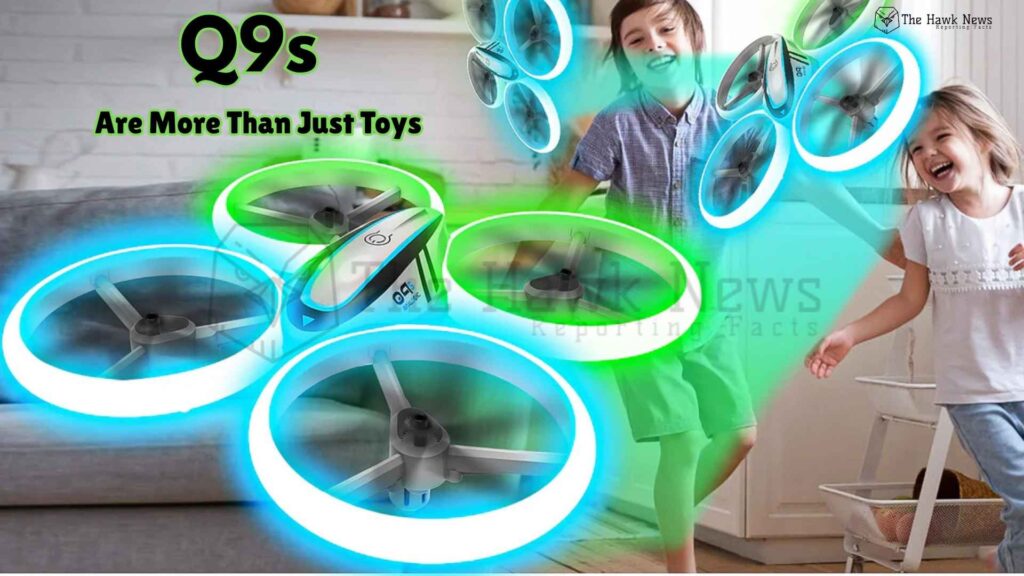
At first glance, the Q9s looks like a glowing toy quadcopter, buzzing around with neon lights and smooth spins.
But look deeper, and you’ll find it’s more than just a toy: it’s a carefully designed piece of technology that blends entertainment, safety, and learning.
The Idea Behind It
The creators of the Q9s weren’t simply trying to make a flashy gadget. Their aim was to design a drone that:
- Kids could fly without frustration.
- Parents could trust for safety.
- Families could enjoy together indoors or outdoors.
It’s a response to two modern needs: children’s growing fascination with technology and parents’ desire for safe, value-driven toys that do more than entertain.
Safe by Design
Traditional drones often have exposed propellers, which can be intimidating—and dangerous—around kids.
The Q9s, however, is built with 360-degree propeller guards, reducing the risk of cuts or damage when it crashes (which it will, plenty of times).
This design choice is more than cosmetic. It tells parents: “We thought about your concerns.” Safety becomes part of the fun.
Fun That Glows
The Q9s is famous for its LED lights. Unlike drones meant purely for professional use, this toy is a spectacle in itself—its glowing frame and color-shifting lights make night flying magical.
For kids, it’s not just about controlling an object in the sky; it’s about watching a mini spaceship light up the backyard.
For parents, it’s an easy way to turn playtime into family time.
Learning Without Lessons
One of the most interesting aspects of drones like the Q9s is how they sneak in learning through play.
- Children pick up basic concepts of aerodynamics (why it hovers, flips, or falls).
- They develop hand-eye coordination as they maneuver the drone through spaces.
- They even learn patience and problem-solving when a crash forces them to reset.
This isn’t packaged as a STEM kit, but it plants seeds of curiosity that could lead to bigger interests in technology, robotics, or engineering later in life.
Technology Made Approachable
For adults, drones often come with steep learning curves—GPS systems, camera controls, regulations. The Q9s strips all that down to the basics:
- One-button take-off and landing.
- Altitude hold for stable hovering.
- Headless mode to make navigation easier for beginners.
By simplifying, it makes technology feel less intimidating.
That’s the hidden genius of toys like these: they give kids the confidence to explore tech without overwhelming them.
Durability = Longer Play Value
Parents know the frustration of buying a toy that breaks in a week. The Q9s was built with durability in mind: lightweight, yet tough enough to survive repeated crashes.
Add to that two batteries for extended playtime, and it suddenly becomes more than a “weekend wonder.”
It’s not just fun for an hour—it becomes part of the toy rotation for months, even years.
From Toy to Lifestyle
Why are toys like the Q9s becoming lifestyle pieces? Because they reflect our cultural shift:
- Tech as play. Kids grow up seeing drones in movies, on YouTube, and even delivering packages—owning one feels like being part of the future.
- Family bonding. Unlike video games, drones encourage kids (and sometimes parents) to step outside, move around, and share the experience.
- Mindful play. There’s something mesmerizing about flying an LED-lit drone at dusk—it’s playful, but also strangely calming.
In a way, the Q9s isn’t just shaping play—it’s shaping how families spend their time.
What It Symbolizes
The Q9s and similar drones represent more than consumer products. They symbolize:
- Accessibility of tech. What was once military-grade technology is now a child’s plaything.
- Blending of function and fun. Safe design + easy controls + visual appeal = a toy that ticks multiple boxes.
- A new kind of childhood. Growing up with drones means growing up with curiosity, creativity, and comfort with technology.
Conclusion
The HASAKEE Q9s isn’t just a toy drone—it’s a statement about where play is headed. It shows us that children’s toys can be exciting without being unsafe, and educational without being dull.
As the line between tech and toys continues to blur, the Q9s stands as an example of how innovation can meet joy, giving kids not only hours of fun but also a first step into the fascinating world of technology.
It’s not just about flying—it’s about imagining, learning, and connecting. And that’s why drones like the Q9s are more than just toys.