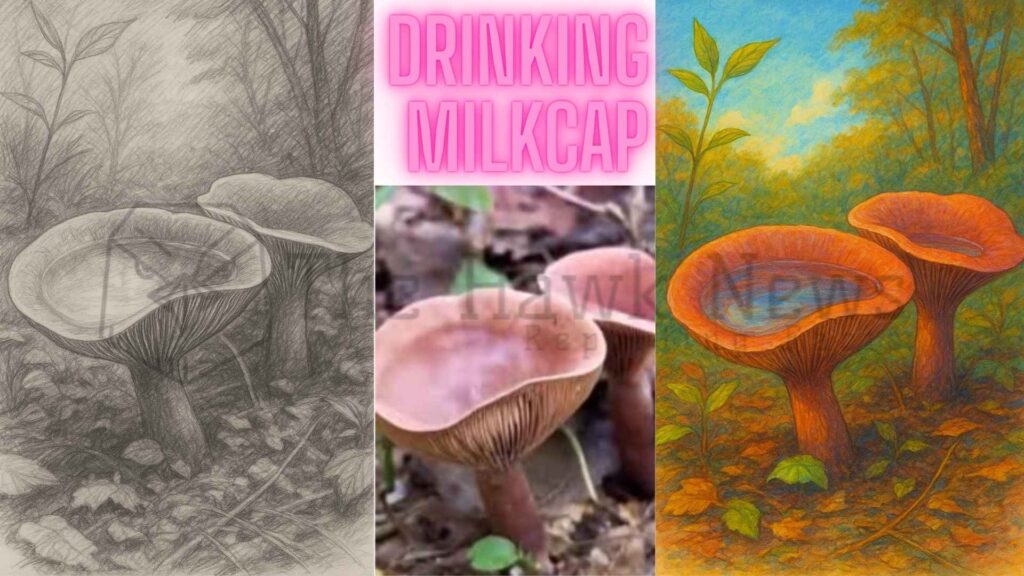
When we think of water storage, we picture dams, lakes, or underground aquifers. But nature has its own fascinating engineers—one of them being the drinking milkcap mushroom (Lactarius volemus), an unassuming fungus with an extraordinary trait: it can act as a tiny underground water reservoir.
At a time when much of the world grapples with water scarcity and climate unpredictability, the humble mushroom reminds us of how delicately and ingeniously ecosystems conserve life’s most essential resource.
The Drinking Milkcap: A Fungus with a Secret
Found across temperate regions of Asia, Europe, and North America, the drinking milkcap might look like just another edible mushroom with its reddish-brown cap and milky latex when cut. But hidden beneath the surface lies its unique water-storing capability. Unlike most fungi, which are primarily known for breaking down organic matter and recycling nutrients, this mushroom can store and release water, effectively functioning as nature’s miniature cistern.
Scientists observed that these fungi, particularly during wet seasons, absorb and retain large quantities of water within their fruiting bodies and underground mycelial networks. Later, during drier conditions, they slowly release this water, maintaining local soil moisture and supporting surrounding plant roots and microbial communities.
In essence, what the drinking milkcap does for the forest floor is not very different from what a reservoir does for a city—collect when plentiful, release when scarce.
How Does It Work? The Science Behind the Reservoir
The secret lies in the structure of fungal mycelium—a vast underground network of microscopic threads. These threads are spongy, highly absorbent, and capable of holding many times their weight in water. In the case of the drinking milkcap, this water-holding capacity is amplified, allowing the mushroom to become a reliable storage point.
Additionally, the mushroom’s fruiting body acts as a moisture-locking chamber. The latex it secretes when cut is rich in proteins and sugars that help retain water, preventing quick evaporation. This feature is not just useful for the fungus itself but creates a buffer zone of humidity in the soil.
For nearby plants, particularly small seedlings or shallow-rooted species, this can be a lifesaver. In fact, ecologists suspect that mushrooms like the milkcap may have played a hidden but vital role in forest resilience during drought periods over centuries.
Mushrooms as Ecosystem Guardians
This ability to store water transforms the drinking milkcap from a curious edible fungus into an ecosystem engineer. Its underground storage acts like a safety valve, ensuring that soil ecosystems don’t collapse during seasonal water shortages.
Moreover, fungi are often in symbiosis with plants through mycorrhizal associations. These partnerships allow fungi to trade nutrients with plant roots, strengthening both partners. In the case of the drinking milkcap, it’s likely that the water-retention capacity of the fungus boosts plant survival rates, especially in young saplings.
Imagine millions of these fungi scattered across a forest: together, they function like a hidden network of tiny reservoirs, balancing water availability in ways humans are only beginning to understand.
Lessons for a Thirsty World
Why does this matter beyond academic curiosity? Because water scarcity is one of the greatest challenges of the 21st century. According to the UN, nearly 2 billion people live in water-stressed regions. The drinking milkcap offers us a bio-inspired model of water conservation.
Engineers and sustainability experts are increasingly looking to biomimicry—adapting designs from nature—to solve modern problems. The way fungi like the milkcap store and gradually release water could inspire new water-harvesting technologies, soil conditioners, or micro-irrigation systems. Imagine agricultural fields equipped with materials that mimic fungal mycelium, soaking up excess rainwater and slowly releasing it to crops during dry spells.
In a sense, the drinking milkcap is showing us how to move from blunt water control (like massive dams) to subtle, distributed storage systems embedded in the ground.
Cultural and Historical Connections
Interestingly, mushrooms like the drinking milkcap have long been part of traditional diets in countries such as China, Russia, and Japan. While appreciated mostly for taste and nutrition, folklore often ascribed them special properties of balance and health. In hindsight, perhaps local knowledge was indirectly reflecting the mushroom’s ecological role: a symbol of quiet sustainability.
As awareness of climate change grows, these traditional associations may gain new significance. Mushrooms are not just food—they are guardians of environmental equilibrium.
The Bigger Picture: Mushrooms and Sustainability
The drinking milkcap is not alone. Many other fungi also influence water dynamics, soil fertility, and carbon cycles. Yet, fungi remain among the least studied organisms compared to plants and animals. In recent years, documentaries and research papers have started calling fungi the “forgotten kingdom” of biodiversity.
Recognizing their role in water security could change how we approach forest conservation and urban greening projects. Imagine city planners deliberately encouraging fungal-rich soils in urban parks or green rooftops, not only for biodiversity but as natural water buffers during heavy rains.
This perspective shifts mushrooms from being quirky organisms on a forest walk to serious allies in climate resilience.
Curiosity Meets Urgency
What makes the story of the drinking milkcap especially fascinating is how it blends wonder with relevance. On one hand, it is almost whimsical to think of a mushroom as a water tank. On the other, it points toward urgent innovations needed to sustain life in the Anthropocene era.
Nature has already engineered complex systems of water storage, soil stability, and micro-climate regulation. We are just beginning to listen. If the drinking milkcap teaches us one thing, it’s that sometimes the answers to global problems lie quietly underground, waiting to be rediscovered.
Conclusion: A Reservoir of Hope
As the world races to solve water scarcity, the drinking milkcap mushroom emerges as an unexpected teacher. Its ability to store and distribute water is not just a quirky biological fact—it’s a lesson in resilience and balance. By studying and mimicking these natural systems, we might find better ways to conserve resources, support ecosystems, and design sustainable futures.
So the next time you see a mushroom after rain, remember: beneath your feet might lie an invisible reservoir, part of a living network that has quietly been solving water challenges long before humans began worrying about them.