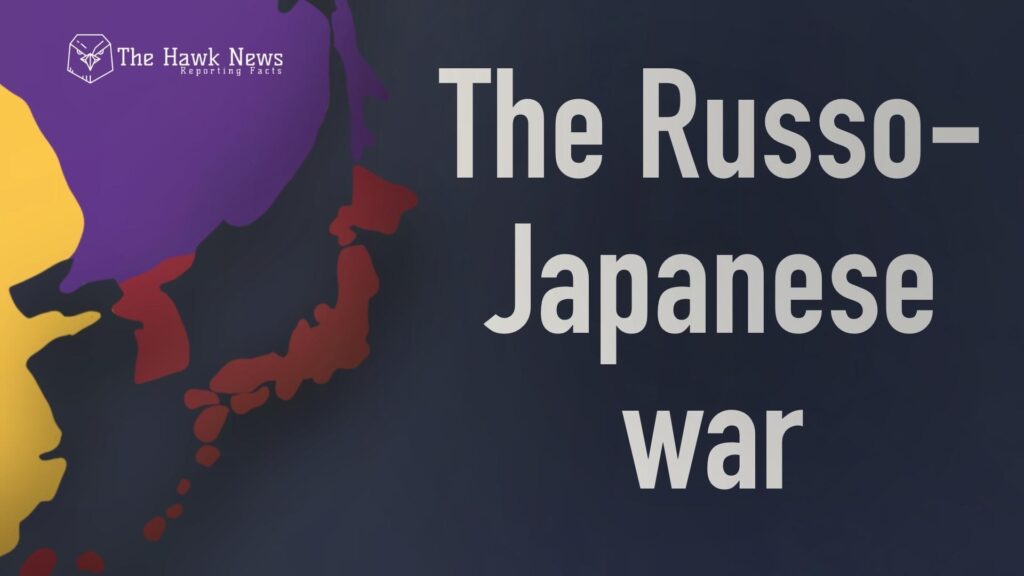
In the early 20th century, the world witnessed a conflict that would shock the global balance of power, reshape Asia, and send tremors across Europe.
The Russo-Japanese War (1904–1905) was not just a clash between two empires—it was the moment when an Asian nation, long underestimated by Western powers, stood up against one of Europe’s largest empires and emerged victorious.
For many, it was the first sign that the old colonial order was not invincible.
From Isolation to Ambition: Japan’s Transformation
For centuries, Japan pursued isolation. Its leaders believed they had little need for trade, with abundant resources at home and suspicion of foreign influence. The humiliations suffered by China at the hands of Western powers during the Opium Wars served as a warning. If China, with its size and heritage, could be carved up by Europeans, then Japan too could fall victim.
That fear changed everything. When American warships under Commodore Matthew Perry appeared in 1853, demanding trade “or else,” Japan had no choice but to open its ports. Yet instead of succumbing to domination, Japan resolved to transform. During the Meiji Restoration (1868), it modernized at breakneck speed—importing Western technologies, reorganizing its army and navy along European lines, and fostering industrial growth.
But Japan’s vision went further than self-preservation. It aspired to become the “Europe of East Asia”—an imperial power that would colonize and dominate rather than be colonized. And for this vision, expansion was necessary.
The First Test: The Sino-Japanese War
Japan’s first major move came against the Qing Dynasty in the First Sino-Japanese War (1894–1895). At the time, Korea was a Chinese tributary state. Japan, seeing opportunity, launched an invasion. The Qing military—undermined by corruption, inflated troop numbers, and outdated weapons—crumbled against Japan’s disciplined and modernized forces.
The victory shocked the world. For the first time, an Asian army had decisively beaten another long-established empire. Japan gained control of Korea and the Liaodong Peninsula in Manchuria, including the prized Port Arthur—a warm-water port critical for trade and naval power.
But Japan’s triumph was short-lived.
The Triple Intervention: Europe Pushes Back
Japan’s success alarmed the European powers, especially Russia, Germany, and France. Together, they pressured Japan to return the Liaodong Peninsula to China. Their reasoning was “to preserve stability,” but the real motive was clear: Russia coveted Port Arthur for itself, as its empire’s ports were ice-bound much of the year.
Japan, not yet confident enough to defy Europe, reluctantly withdrew. But the humiliation cut deep. Japan had fought, bled, and won, only to be robbed of the prize by outsiders. From that moment, resentment simmered, particularly against Russia.
Russia Moves In: The Road to War
Russia quickly took advantage of Japan’s retreat. By 1898, it had secured a lease on Port Arthur, constructed railways through Manchuria, and stationed troops in the region. To Japan, this was an unforgivable insult—Russia was enjoying the very spoils Japan had been denied.
In response, Japan sought allies. In 1902, it signed the Anglo-Japanese Alliance with Britain, which guaranteed mutual support if either faced war against more than one great power. This partnership gave Japan the confidence to act.
As Russian troops expanded deeper into Manchuria and began strengthening their position near Korea, Japan issued warnings. They were ignored. Tensions grew until, in 1904, Japan struck first.
The War Begins: A Surprise Attack
On the night of February 8, 1904, without a formal declaration of war, Japanese forces launched a surprise attack on the Russian fleet anchored at Port Arthur. It was a bold move—similar in spirit to later tactics Japan would use in World War II. The attack crippled much of Russia’s Pacific fleet and set the tone for the war.
From then on, Japan seized the initiative. Its army advanced into Korea and southern Manchuria, defeating Russian forces in battles such as Liaoyang and Mukden. At sea, Admiral Togo Heihachiro’s navy maintained dominance, ensuring Japan controlled vital supply routes.
Russia’s Struggles: Distance and Discontent
On paper, Russia seemed unbeatable. It was one of the largest empires on earth, with vast resources and manpower. But the reality was different. Most of Russia’s military strength was concentrated in Europe, thousands of miles from the battlefront.
To reinforce its troops, Russia relied on the Trans-Siberian Railway—a single-track line still incomplete. Moving men, weapons, and supplies across the frozen Siberian expanse was agonizingly slow. To make matters worse, Britain, allied with Japan, blocked Russian ships from using the Suez Canal, forcing them on a long and perilous voyage around Africa and Asia.
At home, unrest was growing. Tsar Nicholas II faced increasing criticism, and discontent among workers and peasants was boiling over. The Russo-Japanese War would become one of the sparks that ignited the Russian Revolution of 1905.
The Decisive Blow: The Battle of Tsushima
The turning point came in May 1905 at the Battle of Tsushima. After months of travel, Russia’s Baltic Fleet finally reached East Asian waters—exhausted, undersupplied, and demoralized. Waiting for them was Admiral Togo and the Japanese navy.
The result was catastrophic for Russia. In a single day, the Japanese navy destroyed or captured nearly the entire Russian fleet. Only a handful of ships escaped. For the first time in modern history, an Asian power had annihilated a European fleet.
The Treaty of Portsmouth: Roosevelt Steps In
With its military shattered and domestic unrest escalating, Russia had little choice but to negotiate. U.S. President Theodore Roosevelt offered to mediate, and peace talks were held in Portsmouth, New Hampshire.
The resulting treaty was a triumph for Japan. It gained control of Port Arthur, Korea was recognized as within Japan’s sphere of influence, and Japan acquired parts of Manchuria. Russia, humiliated, received little. Roosevelt’s role in brokering peace earned him the Nobel Peace Prize, but for Russia, it was a bitter defeat that undermined confidence in the Tsarist regime.
Legacy: A New Power Emerges
The Russo-Japanese War was more than just a regional conflict. Its consequences were global.
- For Japan, it marked its arrival as a great power. It had defeated a European empire and secured a foothold for further expansion. In World War I, Japan would use this momentum to seize German colonies in the Pacific.
- For Russia, the war was a disaster. The humiliating defeat fueled discontent that would contribute to the revolutions of 1905 and later 1917, ultimately toppling the monarchy.
- For the world, the war shattered the myth of European invincibility. Colonized nations across Asia and Africa watched closely, inspired by the idea that Western powers could be challenged.
Conclusion
The Russo-Japanese War was not just a clash of empires—it was a turning point in modern history. A rising Asian power had confronted and defeated a European giant, signaling a new era. The war set the stage for Japan’s continued expansion, its role in World War I, and eventually, its aggressive imperialism in World War II.
For Russia, it was a bitter lesson in overreach, incompetence, and the dangers of ignoring internal unrest. And for the rest of the world, it was a stark reminder: the balance of power was shifting, and the age of unquestioned European dominance was coming to an end