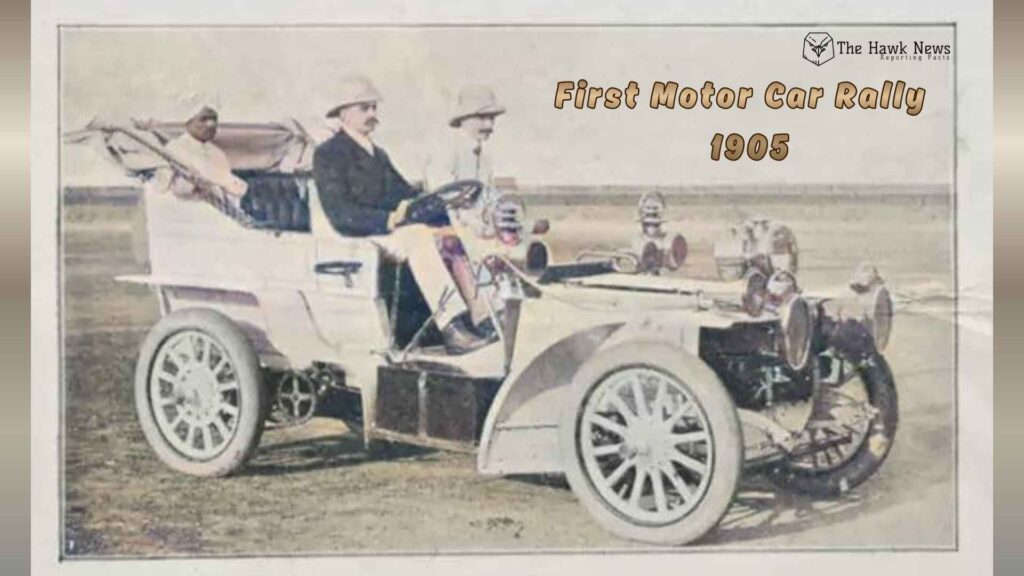
In an age when India’s streets echoed with the clip-clop of horse-drawn carriages and the creak of wooden carts, an unusual spectacle rolled into Bombay on a mild morning in 1905. It was noisy, smelt faintly of gasoline, and drew curious crowds to every major street it passed.
India — still decades away from independence — witnessed its first-ever motor car rally, a moment barely documented but rich with the promise of a rapidly approaching modern era.
For the city of Bombay, then a thriving port metropolis, this rally wasn’t just a race. It was a glimpse into the future.
A City That Stopped to Stare
Motor cars were still alien objects to most Indians in 1905. They arrived in crates, required men in waistcoats to manually crank the engine, and startled horses with their sputtering growls.
So when the rally was announced — a procession of machines that moved without animal power — Bombay took notice.
People lined up along Marine Drive, Kala Ghoda, and Byculla. Children climbed lampposts. Shopkeepers shut their shutters early just to witness the mechanical marvels.
Newspapers of the time mentioned it with fascination and uncertainty, calling these cars “self-propelled contraptions” and “road locomotives.”
Even the word automobile hadn’t fully entered everyday vocabulary.
The Machines That Marked a New Era
The rally featured a handful of early European cars — most likely Renaults, Fiats, Rovers, and the earliest models of Rolls-Royce imported by Parsi and British elites.
They were primitive by today’s standards:
- top speed around 30–40 km/h
- wooden wheels
- brass lamps lit by acetylene
- steering wheels closer to bicycle handlebars
- engines that overheated on steep inclines
But in 1905, they were futuristic.
The rally route stretched across the city, showcasing what these machines could do. For most spectators, it was the first time they saw a vehicle that didn’t rely on hooves or human muscle.
Who Drove These Cars?
At the time, the car-owning community in Bombay was small but influential. Wealthy Parsi businessmen, British officers, and a few Maharajas formed the core of early auto enthusiasts.
Names remain scattered in fragmented archives, but historians believe prominent industrial families and colonial officials took part.
To many of these early adopters, the rally wasn’t about speed — it was about prestige, innovation, and the thrill of defying the known world.
A Rally With No Winner — But a Legacy
Unlike modern races, the 1905 rally wasn’t a competition. There were no lap times, no podiums, no trophies.
Its purpose was simple:
to introduce India to the motor car.
And it worked.
By 1910, the number of cars in Bombay had multiplied several times. Workshops, garages, and early dealerships began to grow.
City planners had to rethink road design and traffic control.
The humble traffic signal was still years away — but the auto revolution had begun.
This rally was the ignition spark.
Why This Forgotten Rally Still Matters
India is now one of the world’s fastest-growing automotive markets — producing millions of vehicles annually, exporting globally, and pushing boundaries in EVs and mobility tech.
But the industry’s roots go back to a modest parade of machines chugging along the dusty roads of colonial Bombay.
The 1905 rally represents:
- India’s earliest flirtation with automotive culture
- the rise of a mobility-driven urban identity
- a turning point that connected India to global technological change
It is a reminder that revolutions often start quietly — with curious crowds, sputtering engines, and a small group of enthusiasts bold enough to embrace the unknown.
A Drive That Still Echoes
120 years later, the roads of Mumbai roar with millions of vehicles. Highways crisscross the country. Motorsport clubs thrive.
And EVs silently glide where once noisy combustion engines struggled.
But if you listen closely, behind the honking chaos of today’s traffic, you can still hear the faint echo of that first rally — a mechanical heartbeat that signaled India’s entry into the age of mobility.
A rally that didn’t just move through Bombay,
but moved India forward.