The Illusion of More
The world no longer dreams in gold and glitter — it dreams in silence.
In slow mornings, in unhurried meals, in the rare privilege of a full breath.
For decades, luxury meant addition — another car, another title, another trip to somewhere else. But now, a quiet rebellion is forming.
People are no longer asking, “What can I get?” but “What can I let go of?”
Henry David Thoreau once wrote, “The price of anything is the amount of life you exchange for it.”
Today, more than ever, we are realizing how much life we’ve spent trading peace for performance.
As 2026 unfolds, the new definition of luxury has little to do with diamonds and more to do with daylight.
The richest among us may no longer be those who own the most — but those who sleep deeply, speak softly, and move through their days with ease.
The Old Definition of Luxury
There was a time when success gleamed loud. Status was measured in square feet, brand names, and followers. The 2010s sold us a story that the more we accumulated, the more we mattered.
Social media amplified the narrative — everyone was curating lives that looked “abundant.” We were told to hustle harder, spend smarter, upgrade faster. Yet behind the glossy screens, burnout became the new normal.
Lifestyle analysts note that the pandemic years cracked this illusion. When travel stopped and stores closed, the question quietly arose: “What does luxury mean when the world pauses?”
It turned out, it meant freedom from noise. Comfort replaced collection; solitude replaced spotlight. For the first time in years, people started craving calm more than cars.
We built so much around us that we ran out of space within us.
The Shift: From Possessions to Peace
If the last decade was about owning more, this one is about feeling whole.
People are no longer impressed by speed; they are seduced by serenity. The younger generation doesn’t dream of skyscrapers — they dream of days without alarms. Remote work, solo travel, minimalist homes, and therapy aren’t trends anymore; they are new forms of wealth.
We no longer want to own the world — we just want a quiet corner in it.
“He who has peace of mind has everything; he who has everything but peace has nothing.” The proverb feels newly relevant in a culture where noise has become our default setting.
The ultimate rebellion now is stillness.
The Three Pillars of the New Luxury
1. Peace — The Luxury of a Quiet Mind
Once, luxury was a yacht; now, it’s eight uninterrupted hours of sleep.
Peace has become the rarest commodity. Between screens, alerts, and endless opinions, silence feels almost extinct.
Anne Lamott once said, “Almost everything will work again if you unplug it for a few minutes — including you.”
That line could be the motto of modern well-being. The new luxury is the ability to step back, detach, and simply be.
Peace is the softest form of power — unshowy, unmarketed, yet profoundly magnetic.
2. Time — The New Currency
Time used to be what we traded to buy success; now, it is the success itself.
For years, society glorified busyness — wearing exhaustion as a badge of honour.
But today, people are quietly reclaiming hours, days, even years they once sacrificed to productivity.
The real elite are those who can take a slow morning walk, cook their own meals, or finish a workday before sunset. Time isn’t money anymore — it’s meaning.
As one wellness coach aptly put it, “We keep scheduling our lives like meetings, but healing doesn’t happen on a calendar.”
3. Boundaries — The Invisible Wealth
If peace is the foundation and time the treasure, boundaries are the walls that protect them.
Learning to say no — without apology — has become an act of emotional self-respect. Boundaries in relationships, workplaces, and digital life define how much energy we keep for ourselves.
“Lack of boundaries invites lack of respect.” That anonymous quote might sound simple, but it sums up a cultural awakening. In the past, availability equalled value; now, restraint equals respect.
Boundaries are the invisible luxury that sustain all others.
The Emotional and Cultural Awakening
Sociologists call this the Era of Emotional Economy — where inner stability is the highest form of status. Even traditional luxury brands have begun shifting their language from glamour to grounding. “Quiet luxury” is not just a fashion statement; it’s a mindset.
The rich are wearing linen, the young are wearing peace. Homes are getting smaller but warmer. Lifestyles are becoming simpler but saner.
Luxury has turned from something to show off into something to feel.
Redefining Luxury in Your Own Life
This new luxury isn’t exclusive; it’s available to anyone who chooses intention over impulse. Start with an emotional audit:
- What drains your peace? Reduce it.
- What steals your time? Reclaim it.
- Where are your boundaries weakest? Reinforce them.
Practical steps can begin small:
- A ten-minute sunrise without your phone.
- A Sunday spent offline.
- Decluttering a room — or a relationship — that no longer aligns.
- Scheduling rest first, then work.
“The richest person is not the one who has the most, but the one who needs the least.” That saying feels like the quiet anthem of this decade.
True luxury is living in alignment with your values — not your possessions.
The Quiet Gold of Tomorrow
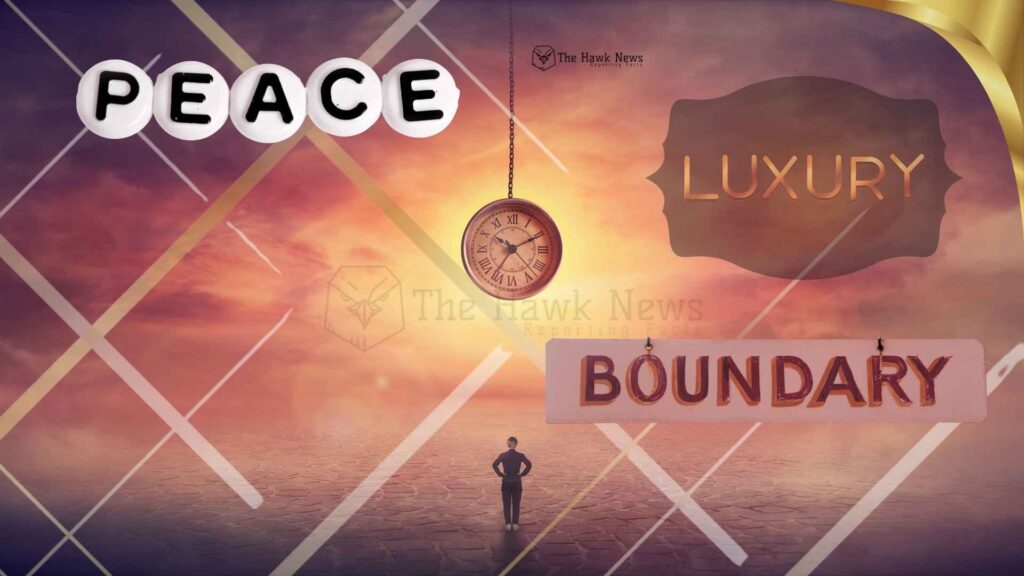
Peace, time, and boundaries — three words that sound ordinary, yet together they redefine success.
Luxury is no longer loud; it whispers. It doesn’t shout from billboards; it hums through balanced days and rested hearts.
As we move deeper into 2026, the future will belong to those who protect their calm as fiercely as others guard their assets. Because in a noisy world, silence is the new gold. And in a restless age, rest is the new success.