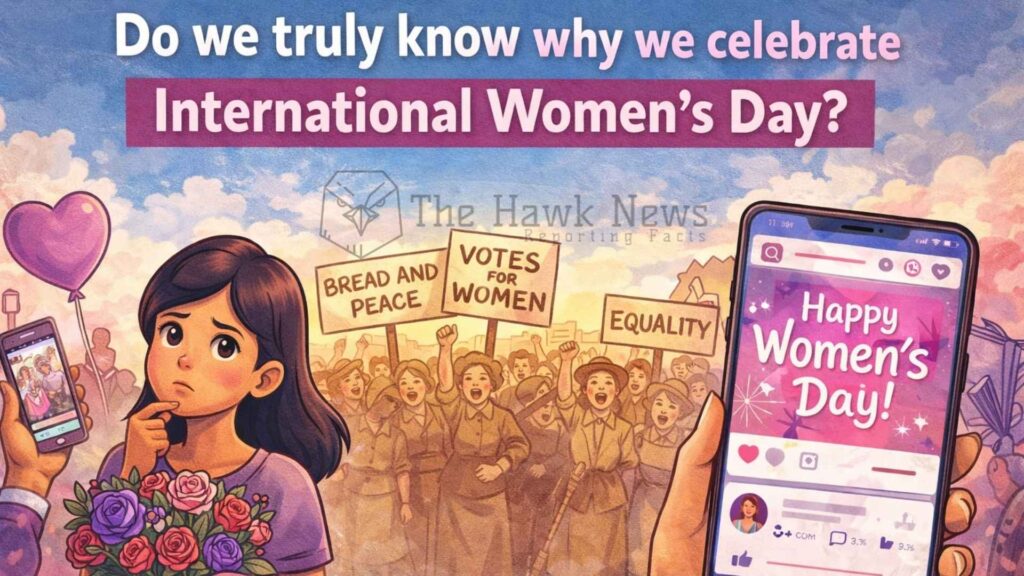
Every year on March 8, social media fills with cheerful messages wishing women around the world a “Happy Women’s Day.”
Offices decorate spaces in shades of purple and pink, companies launch celebratory campaigns, and bouquets of roses are exchanged in appreciation.
The intention is warm and well-meaning.
Yet beneath the greetings lies a quiet question worth asking: Do we truly know why we celebrate International Women’s Day?
For many people—especially younger generations—the answer is surprisingly uncertain.
Ask a group of students or young professionals why the day exists, and the responses often revolve around appreciation, celebration, or simply “honoring women.”
Few can trace the deeper origins of the day or explain the struggles that gave birth to it.
And that gap between celebration and understanding is where the real story begins.
A Day Born From Struggle
International Women’s Day did not begin as a cheerful observance. It was born in a time of labor unrest, political awakening, and social inequality.
In 1910, German activist Clara Zetkin proposed the idea of an international day dedicated to women’s rights during the International Socialist Women’s Conference.
Her vision was bold and unapologetically political.
Women at the time were fighting for basic rights that today are often taken for granted—such as the right to vote, fair wages, and safe working conditions. Many worked long hours in factories for significantly lower pay than men, with little legal protection.
The day Zetkin proposed was not meant to be symbolic.
It was meant to be a rallying point for change.
Across Europe and North America, women gathered in protests and demonstrations, demanding a more equal society. International Women’s Day was not a celebration of comfort; it was a call for reform.
When Women’s Voices Changed History
One of the most powerful moments associated with the day occurred in 1917.
Women textile workers in Russia organized a strike demanding “Bread and Peace,” protesting food shortages, war conditions, and harsh labor environments. Their action helped ignite the Russian Revolution.
What began as a protest by women workers soon became a turning point in global history.
In recognition of this movement, March 8 eventually became widely recognized as the date for International Women’s Day.
The message was clear: when women organized and demanded change, history could shift.
Recognition by the World
Decades later, the movement gained global institutional support.
In 1975, the United Nations officially recognized International Women’s Day. The recognition helped spread awareness across continents, bringing the conversation about gender equality to a global stage.
Governments, institutions, and organizations began observing the day, often focusing on themes related to women’s empowerment, leadership, and social progress.
This recognition was a major milestone.
But it also marked the beginning of a transformation.
Celebration Without Context
Today, International Women’s Day is widely celebrated in schools, workplaces, and communities.
People share inspiring quotes, organize appreciation events, and post tributes online. Companies launch marketing campaigns highlighting women’s achievements. Social media platforms are flooded with hashtags.
All of this reflects genuine admiration.
Yet something subtle has shifted.
In many places, the day has gradually moved away from its original purpose as a platform for activism and awareness. The tone has softened from protest to celebration.
While recognition is important, celebration without context can sometimes blur the deeper message.
A greeting card cannot tell the full story of the women who marched, protested, and risked their livelihoods to demand equal rights.
A bouquet of roses cannot capture the courage of those who stood in factory lines demanding fair wages.
And a hashtag cannot fully explain the long journey toward gender equality.
The Forgotten Questions
Perhaps the most important questions surrounding International Women’s Day are the simplest ones:
- Why was the day created?
- Who fought to establish it?
- What struggles shaped its meaning?
- How far has the world come since then?
When these questions are not asked, the celebration risks becoming surface-level.
The day begins to revolve around aesthetics—purple banners, pink themes, celebratory slogans—rather than understanding.
But the pioneers behind International Women’s Day never imagined it as a decorative observance.
They imagined it as a reminder of unfinished work.
Why Remembering Matters
History is not merely a record of events. It is a guide for understanding the present.
When the origins of movements are forgotten, the purpose behind them can slowly fade. Over time, powerful ideas can transform into rituals that people follow without reflection.
International Women’s Day carries lessons that remain relevant today. While significant progress has been made—women voting, leading governments, and shaping industries—many challenges still exist around the world.
Issues such as wage gaps, unequal representation, and violence against women continue to demand attention.
Remembering the origins of the day does not diminish its celebratory aspect. Instead, it strengthens it.
Celebration becomes meaningful when it is grounded in awareness.
A Celebration With Purpose
International Women’s Day does not need to abandon celebration.
Acknowledging achievements, honoring inspiring women, and expressing appreciation are all important parts of the day.
But these gestures should be accompanied by understanding.
Understanding the struggles that led to the rights many enjoy today.
Understanding the movements that changed laws and societies.
Understanding that equality was not simply granted—it was fought for.
When people learn the “why” behind the day, the celebration becomes deeper and more purposeful.
Reclaiming the Vision
Perhaps the most fitting way to observe International Women’s Day is to balance celebration with curiosity.
Instead of simply sharing greetings, people can take time to learn about the history behind the day.
Schools can teach the origins of the movement. Conversations can explore the progress that has been made and the work that remains.
The goal is not to diminish the joy of celebration.
The goal is to ensure that celebration carries meaning.
Because International Women’s Day was never meant to be only about roses, greetings, or color themes.
It was meant to be about awareness.
And awareness, when nurtured and passed on to new generations, ensures that the vision behind the day does not fade into history.
It ensures that the story continues.