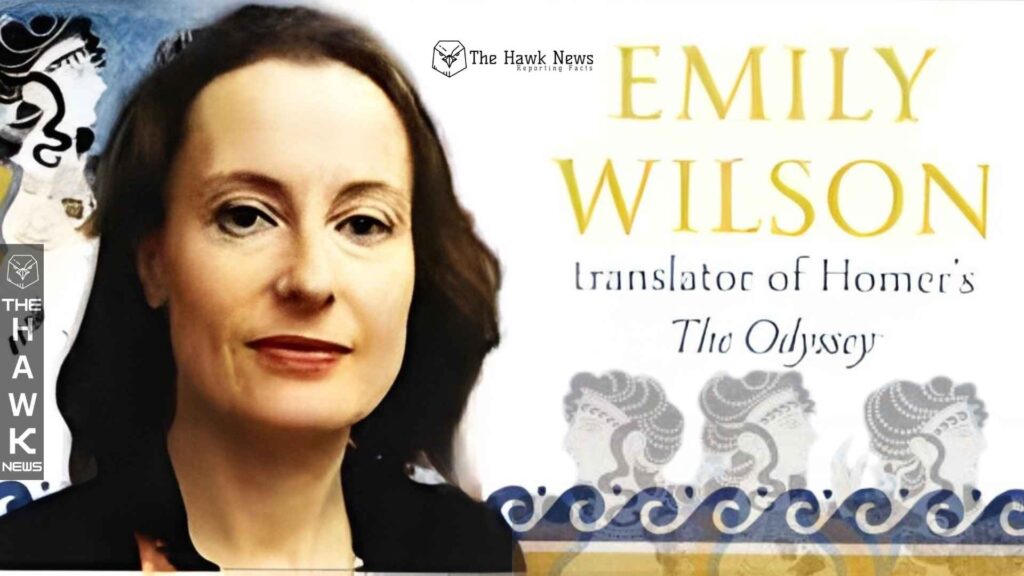
A Familiar Tale, Retold with New Clarity
For over 2,700 years, The Odyssey has echoed across time — the story of a man who leaves home, fights gods and monsters, and spends ten years trying to return to his family.
But in 2017, Emily Wilson, a British classicist, became the first woman to translate Homer’s epic into English — and the sea stirred anew.
Her translation doesn’t just retell the tale; it reclaims its rhythm, restores its heart, and reawakens its moral complexity.
It’s not about gender — it’s about vision.
A Clean Light Over Old Waters
Wilson’s Odyssey is striking for its simplicity.
Where previous translators cloaked Homer’s lines in grandeur and ornament, Wilson strips them to clarity — lean, musical, precise.
Her opening line itself changed history:
“Tell me about a complicated man.”
Where others called Odysseus “wily,” “cunning,” or “resourceful,” she chose complicated.
That single word reframes the hero — not as flawless, but fragile.
It reminds us that complexity is not weakness; it’s humanity.
In Wilson’s words, the epic feels clean, accessible, alive — closer to breath than to bronze.
Women Seen, Not Silenced
One of Wilson’s quiet triumphs is how she restores the women of the Odyssey — Penelope, Circe, Calypso, the enslaved girls — with nuance and dignity long obscured.
Where earlier versions labeled enslaved women as “sluts” or “whores,” Wilson simply calls them girls.
She doesn’t sanitize their fate; she humanizes it.
This small act of translation becomes an act of truth-telling.
“Translation,” she said in an interview, “is about choices — and every choice is an interpretation of power.”
Through her lens, the Odyssey becomes not just the story of a man’s return, but of what it costs others for him to come home.
The Moral Undercurrent — Home as a Mirror
Wilson’s translation doesn’t glorify Odysseus as a flawless hero.
It lets us see him as Homer likely intended — brilliant but broken, tender yet manipulative, brave yet blind to his own faults.
His journey home becomes less about geography and more about conscience.
Every island he lands on reflects a temptation — of pride, desire, or forgetfulness.
And when he finally returns to Ithaca, it’s not triumph that defines him, but recognition.
“The world’s constant narrative is leaving and returning,” Wilson once said.
“It’s what it means to be human — to wander and to seek belonging.”
Language as Light, Not Decoration
Wilson’s prose has rhythm but not rigidity.
Her Homer speaks plainly — as if inviting readers, not intimidating them.
It’s what makes her version so fresh: she writes to communicate, not to perform.
This approach reveals something about modern storytelling —
that clarity, when done with heart, is more powerful than complexity pretending to be wisdom.
The Spiritual Pulse Beneath the Sea
Beneath the surface of Wilson’s translation lies a moral heartbeat.
Her Odyssey reminds us that home is not just a place — it’s a reconciliation.
It’s where truth, loss, and love finally meet.
Odysseus survives storms, monsters, and gods — but the hardest journey is the one inward.
In that, Wilson’s translation is not just literature; it’s philosophy.
“Even in translation,” she once wrote, “we carry the weight of our own voice.”
Her Odyssey tells us that every retelling of truth, like every act of return, must pass through humility.
Through Emily Wilson’s Eyes
Through Wilson, we don’t just read Homer — we hear him again.
The poem feels ancient yet intimate, vast yet vulnerable.
She lets the sea sing, but ensures we never forget the cries of those drowned beneath it.
Her work reminds us why great literature endures:
because every age needs to hear the same story differently.
And perhaps that’s what Homer himself intended —
that every translation is another voyage home.
Closing Reflection
Emily Wilson’s Odyssey doesn’t rewrite Homer.
It reveals him.
It reminds us that even the oldest tales can still breathe,
and that clarity, empathy, and truth — when joined — make language timeless.
“For we are all,” as Homer wrote,
“a story still unfolding upon the sea.”